

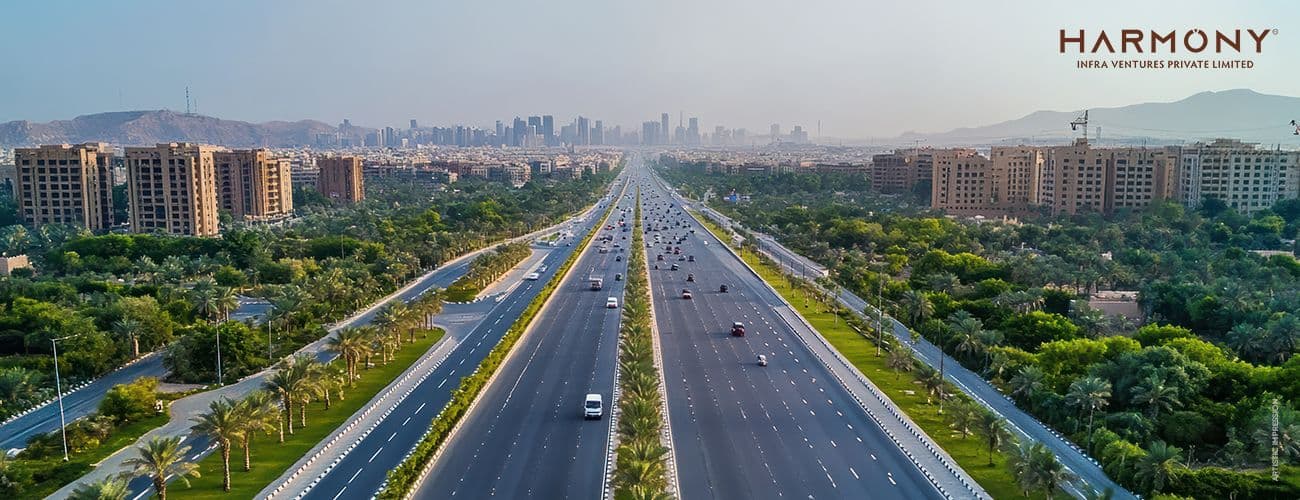
How the Delhi-Dehradun Expressway Is Reshaping Real Estate Growth?
Every serious real estate developer in Delhi NCR is watching one infrastructure project very closely right now: the Delhi-Dehradun Expressway. A 210-kilometre corridor connecting the capital to one of North India's most sought-after hill destinations does not just cut travel time. It changes which addresses are worth paying attention to.
The journey from Delhi to Dehradun that used to take close to six hours is now down to roughly two and a half. That single change is enough to shift how buyers, investors, and developers think about the entire stretch of land in between.
New Market Corridors
Roads have always preceded real estate growth. Before a locality becomes desirable, access improves. Before prices move, infrastructure arrives. The Delhi-Dehradun Expressway is running the same playbook that every major highway project in India has run before it.
Towns along the corridor that received little serious buyer attention before are now on the radar. Meerut, Muzaffarnagar, Haridwar, and the areas approaching Dehradun are seeing footfall from investors and end users who would not have looked this way two years ago. What was a drive nobody wanted to make regularly is now a commute that working professionals are willing to consider.
Location Intelligence
Most developers enter a market after the opportunity has already been noticed by everyone else. By that point, land prices have moved, competition has increased, and the buyer who was going to get the best deal has already made their choice. The developers who create real value are the ones who read the signals before the crowd does.
Harmony Infra Ventures has built its portfolio on this kind of thinking. With 18 years of experience across real estate, the group has projects in Delhi NCR, Mohali, and Kasauli. The Kasauli project in particular reflects a deliberate read on where hill market demand is heading as the expressway brings Himalayan foothills within practical distance of Delhi.
Real Growth Signals
Buyers regularly ask whether expressway projects deliver on their real estate promise or whether the appreciation stays on paper. The honest answer is that growth happens when three things align: a credible developer, a well-positioned project within the corridor, and a delivery timeline that holds.
When any one of these is missing, buyers end up with a plot of land near a highway and not much else. This is why the developer question matters as much as the location question in expressway markets. A buyer needs to know that the person building their home will still be around when keys are handed over.
Chandigarh Mohali Market
The expressway story is also influencing how buyers think about Punjab. As Delhi NCR's infrastructure footprint grows, buyers searching for the best real estate company in Chandigarh are increasingly looking at Mohali as a parallel market worth considering. Planned development, improving road networks, and proximity to Chandigarh are making Mohali a serious conversation.
Harmony Infra Ventures has active projects in Mohali through its sister concern Horizon Group, including Horizon Greensville and Horizon Belmond. These projects were not launched in reaction to current demand. They reflect a longer view of where the tricity market was heading.
Homebuyer Perspective
An expressway does not just shrink distance. It expands the definition of what makes a good address. A location that sat 90 minutes outside a buyer's comfort zone can shift into a completely acceptable commute once travel time drops by half. That is the kind of change that moves markets in a sustained way.
The Delhi-Dehradun corridor is at the early stage of this shift. New pockets are forming. Land values are beginning to move. For buyers who act before the market reaches full awareness, the opportunity is real. The only question worth spending time on is which developer to trust with that decision.
Want to explore real estate opportunities along the Delhi-Dehradun corridor? Connect with Harmony Infra Ventures and find out how the group is already positioned in the right markets.